DIEP Flap vs. Implant Reconstruction: Which Is Right for You?
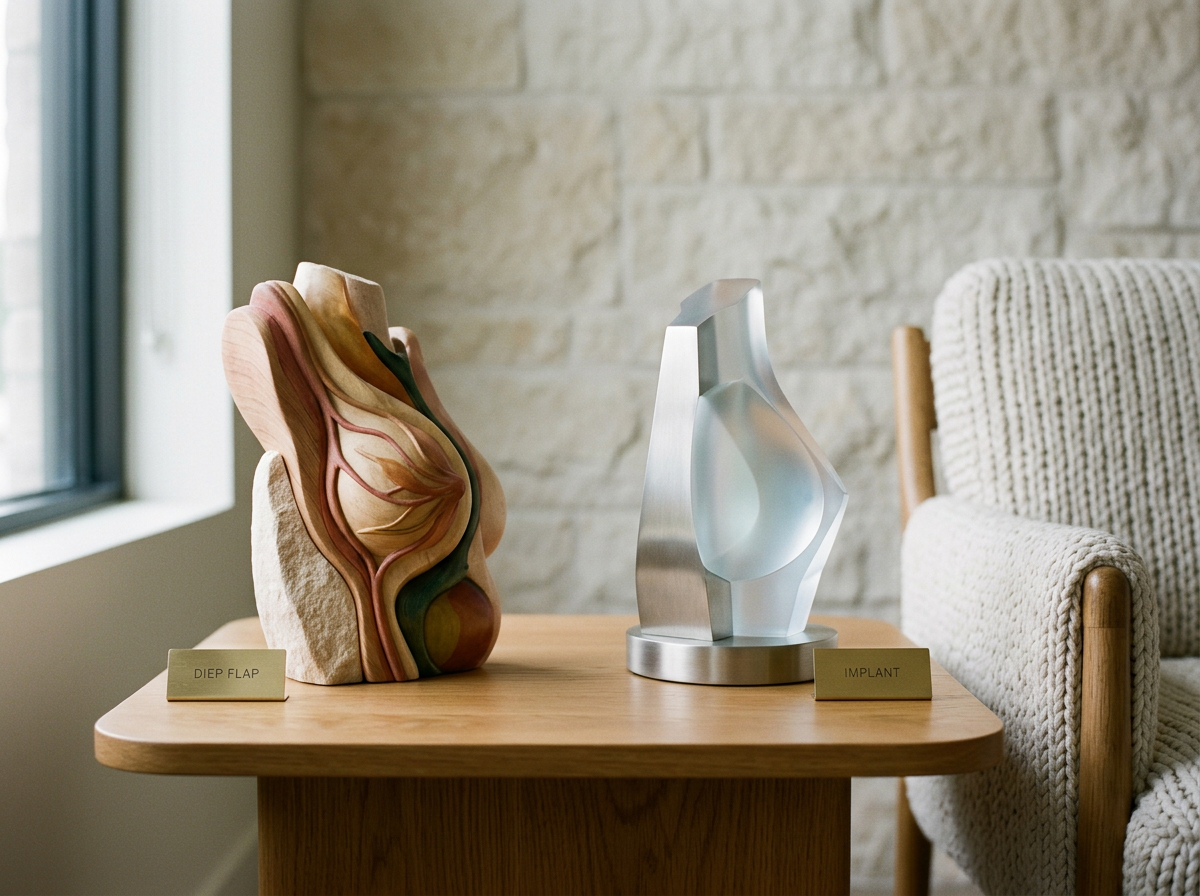
Both DIEP flap and implant-based reconstruction can restore a natural breast shape after mastectomy, but they build that shape in very different ways. DIEP flap uses your own tissue; implants use a silicone or saline device. The right choice depends less on preference and more on your anatomy, your treatment history, and what you're prioritizing during recovery and beyond.
What is DIEP flap reconstruction?
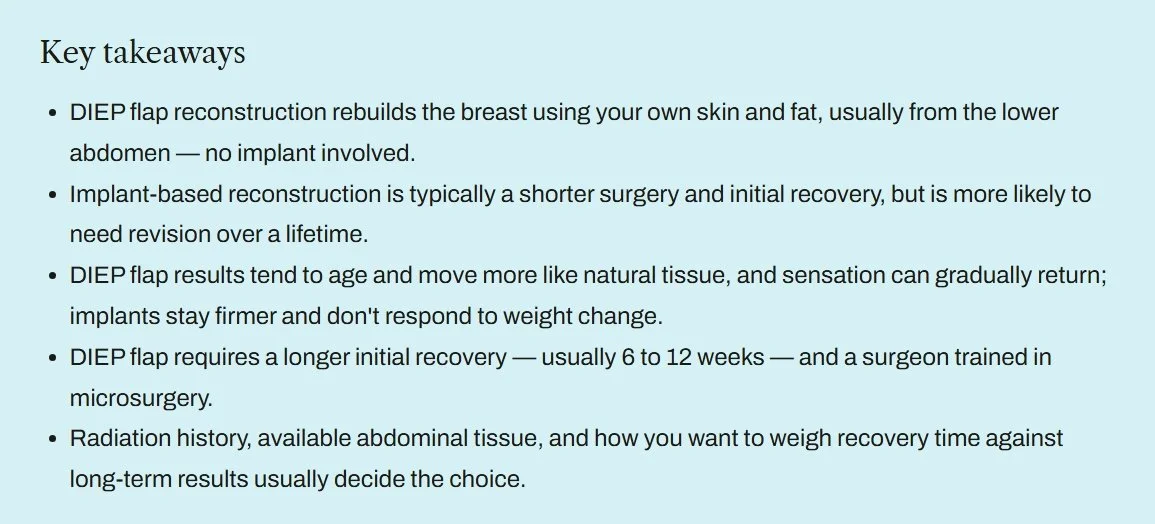
DIEP stands for deep inferior epigastric perforator flap. It's a form of autologous, or "own tissue," reconstruction that uses skin and fat from the lower abdomen to rebuild the breast — similar to the tissue removed in a tummy tuck. The blood vessels supplying that tissue are carefully dissected and reconnected to vessels in the chest under a surgical microscope, which is what allows the tissue to survive and take on its own blood supply in its new location.
Unlike older flap techniques such as the TRAM flap, DIEP flap surgery preserves the abdominal muscle, which generally means less impact on core strength and a lower risk of abdominal wall weakness or hernia afterward.
What is implant-based reconstruction?
Implant-based reconstruction rebuilds breast volume using a silicone or saline implant, often supported by a tissue expander placed at the time of mastectomy and gradually filled over several weeks or months before the permanent implant is placed. In some cases, an acellular dermal matrix (a biologic support material) is used to help position and support the implant. This approach generally involves one to two surgeries and a shorter recovery than autologous methods.
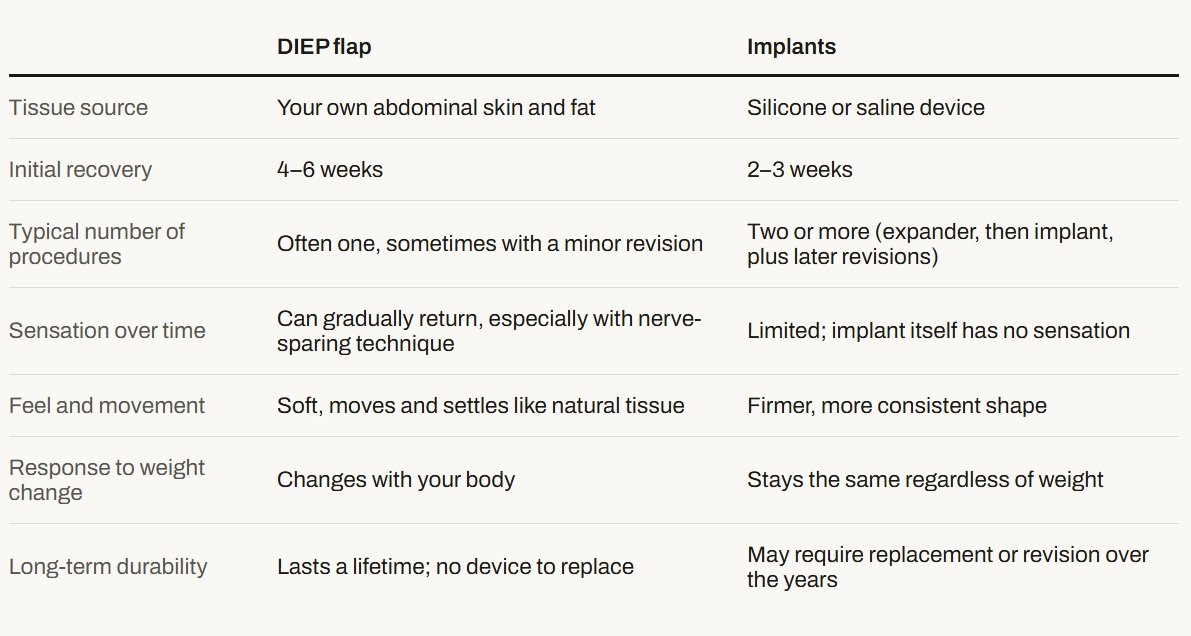
Comparing DIEP flap and implant reconstruction
Which option fits your situation?
If you've had, or will need, radiation: DIEP flap tissue generally tolerates radiation better than implants, which are more prone to complications like capsular contracture in irradiated tissue.
If you'd rather avoid a second surgical site: implants don't require an abdominal incision, so there's no donor-site scar or recovery to manage there.
If autologous tissue isn't available: patients who are very thin or have had significant prior abdominal surgery may not have enough donor tissue, making implants the more practical option.
If a shorter initial recovery matters most: implant reconstruction generally gets you back to normal activity faster.
If you're prioritizing long-term, natural-feeling results: DIEP flap tends to deliver a result that ages and moves more like your own body over time.
Questions worth asking at your consultation
Based on my anatomy and health history, am I a candidate for both options?
Have I had, or will I need, radiation — and how does that affect the recommendation?
How many DIEP flap procedures have you performed, and what is your complication rate?
What would recovery realistically look like for me, given my work and home responsibilities?
What are the long-term revision rates for each option in your practice?
Frequently asked questions
Is DIEP flap reconstruction more painful than implants?
DIEP flap involves two surgical sites — the chest and the abdomen — so early discomfort is often more noticeable than with implant reconstruction. Most patients manage pain well with a structured recovery plan, and discomfort typically eases significantly within the first two weeks.
How long does DIEP flap recovery take?
Most patients return to light daily activity within 2 to 3 weeks and to full activity, including exercise, by 6 to 8 weeks. Full settling of the reconstructed breast can take several months.
Can implants be used after radiation?
They can, but radiated tissue is more prone to complications such as capsular contracture, infection, and poor healing around an implant. Many surgeons recommend autologous options like DIEP flap for patients who have had or will need radiation.
Will insurance cover breast reconstruction?
Under the Women's Health and Cancer Rights Act, most group health plans that cover mastectomy are required to also cover reconstruction, including procedures on the opposite breast to achieve symmetry. Coverage details vary by plan, so it's worth confirming specifics with your insurer.
Can I switch from implants to DIEP flap later?
Yes. Some patients start with implant reconstruction and later convert to DIEP flap, often due to complications, changing preferences, or the desire for a more natural long-term result. It's a more involved conversation, but it's a common and well-established path.